Conditions we support
Huntington's disease NDIS support in Queensland

Huntington's disease needs a team that knows it.
- Support ratios in every home. No shared ratios.
- 1:1 and 2:1
- SIL homes from Cairns to the Gold Coast.
- 10 regions
- SIL placement.
- 7 to 14 days
- Call us any time, day or night.
- 24/7
About the condition
Understanding Huntington's disease
Huntington's disease (HD) is an inherited condition that slowly damages nerve cells in the brain. It is caused by a change in one gene, called the huntingtin gene.
Each child of a parent with HD has a 50% chance of inheriting the gene change. Most people who inherit it will develop HD at some point in their life. A person who does not inherit it cannot pass it on to their children.
Symptoms often begin between the ages of 30 and 50, although they can start earlier or later. HD affects movement, thinking and mood, and it progresses over many years. Everyone's path is different, even within the same family.
Juvenile Huntington's disease is when symptoms start before the age of 20. It often looks different from adult onset HD. Stiffness, slowness and changes in learning and behaviour are common, and some young people have seizures. Jerky, uncontrolled movements are less common than in adults.
There is no cure for HD yet. Medicines and therapies can help manage some symptoms, and the right support makes a real difference to quality of life. The person's neurologist or specialist HD clinic is the best source of medical advice.
Symptoms
Three areas that overlap.
HD affects three areas of life at once. Changes in one area affect the others, so support has to cover all three.
Movement.
Jerky, uncontrolled movements called chorea. Clumsiness, poor balance and falls. Over time, stiffness, slower movement and trouble with speech and swallowing.
Thinking.
Slower thinking. Trouble planning, organising, starting tasks or switching between them. Acting on impulse. Not always being aware of the changes. People often understand more than they can say.
Mood and mental health.
Depression, anxiety, irritability and apathy (losing drive and motivation) are common. Some people get stuck on a thought or a routine. These changes can start years before movement changes.
Depression in HD is common and can be treated. If you're worried about someone's mood, talk to their GP or specialist. If someone is in danger, call 000.
Daily life
How it can affect daily life
HD changes slowly, but over time it touches almost everything.
Eating and drinking.
Swallowing gets harder, which raises the risk of choking. Mealtimes need care and time.
Weight.
Many people with HD need more energy than usual and can lose weight without trying.
Moving around.
Falls, bumps and trips become more likely as movement changes.
Talking.
Speech can become slow, soft or hard to understand, even when the person knows exactly what they want to say.
Work and money.
Planning and organising get harder, which can affect work, driving and managing money.
Relationships.
Irritability, apathy and changes in insight can put strain on partners, children and friends.
Why specialist support
Why HD needs specialist support.
Many providers have never supported someone with Huntington's disease. HD brings a set of risks that need planning, training and the right number of people in the room.
- Choking and swallowing. Every meal and drink carries risk. Workers must follow the speech pathologist's mealtime plan every time.
- High calorie needs. Many people need extra meals and snacks across the day to keep their weight up, guided by a dietitian.
- Falls. Sudden movements and poor balance mean falls are a constant risk, day and night.
- Communication. Workers need time, patience and the right tools to understand the person and to be understood.
- Changed behaviours. Irritability, impulsivity and getting stuck on one idea need calm, consistent responses and a clear plan.
- Families across generations. A parent, sibling or child may also have HD, may be at risk, or may be caring while facing the same future.
- Carers who may be at risk themselves. We keep this in mind in how we support and include family.
Our support
How we support people living with Huntington's disease
HD changes over many years. We plan for the stage the person is in now, and we plan ahead for the next one. Changes of support happen with the same team, so the person and family don't start again.
Early stage.
The person is often still working, driving and living independently. Changes are subtle: mood, planning, small movements, trouble at work. This is the time to build a relationship, plan ahead and keep life going.
How we help
- Specialist Support Coordination: an NDIS plan that fits now and plans for later.
- Community Participation: keep work, sport, hobbies and friendships going.
- Dementia Home Care: a few hours a week with tasks that have become harder, from a worker the person gets to know.
- Planning ahead: we encourage the person to talk with their doctor and family about an enduring power of attorney, an advance health directive and their wishes for later care, while they can make these decisions themselves.
Middle stage.
Movement, speech and swallowing become harder. Work and driving usually stop. Falls and weight loss become bigger concerns, and more help is needed with daily tasks.
How we help
- Dementia Home Care: more hours, personal care and overnight support at home.
- Short Term Accommodation and Respite: real breaks for the family, at home or in a respite home.
- High Intensity and Complex Care: swallowing support and behaviour support, with Registered Nurse oversight.
- Community Nursing: in Brisbane, Logan, Ipswich, the Sunshine Coast, the Gold Coast and Toowoomba.
- Supported Independent Living or Medium Term Accommodation: when home is no longer safe, or while the long term plan is worked out.
Late stage.
The person needs full support with daily living. Speech may be very limited and swallowing is high risk. Some people have a feeding tube. Comfort, dignity and familiar faces matter most.
How we help
- Supported Independent Living: 1:1 or 2:1 support around the clock, with active overnight support where needed.
- High Intensity and Complex Care: tube feeding (PEG), managing severe swallowing difficulty (dysphagia), complex bowel care and complex wound management.
- Community Nursing: Registered Nurse led care in our nursing regions.
- Working with the person's GP, specialists and palliative care team, so care follows the person's wishes.
In hospital? Our Hospital to Home pathway brings Medium Term Accommodation, SIL, home care and coordination into one plan, with one named contact.
Supported Independent Living
Homes set up for Huntington's disease.
Our Supported Independent Living homes are purpose built and set up for dementia and Huntington's disease. Support is 1:1 or 2:1 only. We don't run shared ratios. Before someone moves in, we set the home up around them: their movements, their mealtime plan, their routines and the things they love.
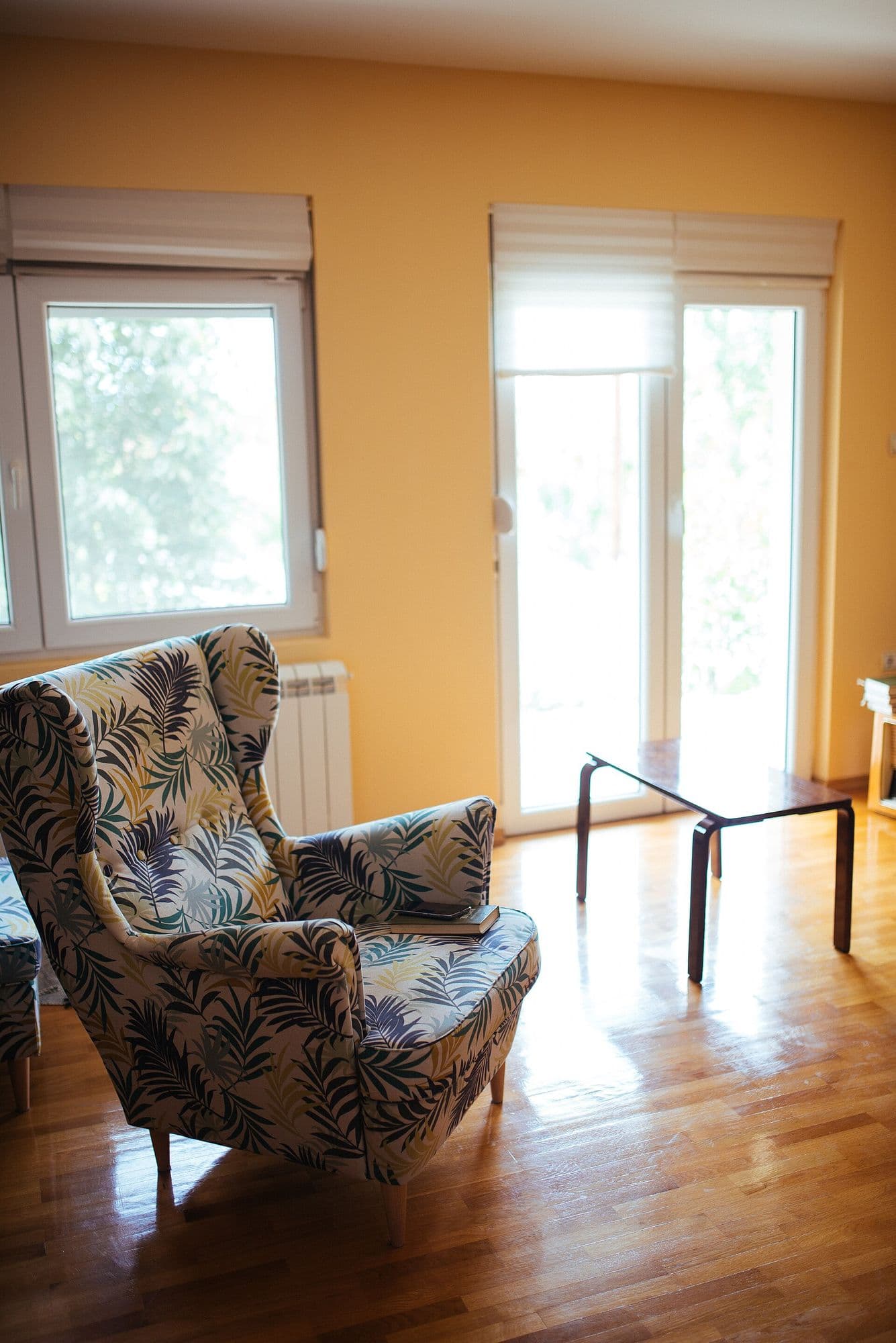
How we set each home up around the person.
Falls aware layouts.
Clear walkways, furniture placed for safe movement and good lighting day and night. We follow the person's OT and physio recommendations.
Stable, supportive seating.
Seating and equipment chosen with the person's OT to suit their movements and posture, funded through their NDIS plan.
Room to move safely.
Open space so the person can move freely without bumping into things.
Mealtime and swallowing support.
We put the speech pathologist's mealtime plan into practice at every meal and drink, with staff trained in that plan before they support the person.
High calorie nutrition.
Regular meals and snacks across the day, following the dietitian's plan, with weight checked and changes reported.
Calm, low stimulus spaces.
Quiet places to rest, and a home that avoids noise, clutter and rush.
Consistent routines and staff.
The same small team, the same daily rhythm. Familiar faces reduce stress for everyone.
1:1 and 2:1 staffing.
Matched to the person's needs, including 2:1 for transfers or changed behaviours where assessed.
Active overnight support.
Awake staff overnight where needed for falls, repositioning or night time distress.
Homes in Toowoomba, the Sunshine Coast, Brisbane North, Brisbane South, Ipswich, Logan, the Gold Coast, Cairns, Townsville and Bundaberg. SIL placement in 7 to 14 days.

Nursing and complex care
Clinical care, at home.
Our Registered Nurse leads high intensity supports and signs off every worker's competency. Our Community Nursing team supports people with HD at home in Brisbane, Logan, Ipswich, the Sunshine Coast, the Gold Coast and Toowoomba. That includes PEG (feeding tube) care, dysphagia (swallowing difficulty) management, seizure management and medication support. Across Queensland, our High Intensity and Complex Care team supports enteral feeding, severe dysphagia, epilepsy and seizure management, complex bowel care and wound care.
The whole family
HD is a family condition.
Huntington's disease rarely affects just one person. A partner may be caring for someone they love while raising children who are at risk. An adult child may be caring for a parent while deciding whether to have a genetic test. Some families have more than one person living with HD at the same time. We see the whole family, not only the person we support.
Partners.
Partners often carry the most. We help build a plan that gives them real breaks, and we keep them involved in decisions.
Children and young people.
Children may become young carers. We encourage honest, age appropriate conversations and point families to their GP or HD clinic for support for young people.
People at risk or gene positive.
Predictive testing is a personal choice, usually made with a genetic counsellor. We never assume, and we never share genetic information without consent.
Juvenile HD.
When a young person has HD, the whole family's life changes. Call us to talk through the young person's needs and what we can offer.
Working together
We work with the person's whole team.
Good HD care is a team effort. We follow the plans of the person's health and allied health team, report changes quickly and turn up to the meetings that matter.
Neurologists and HD clinics.
We report changes in movement, mood, weight and behaviour, so the treating team can act early.
Speech pathologists.
We put mealtime and communication plans into practice, every time.
Dietitians.
We follow nutrition plans, offer meals and snacks as planned, and report weight changes.
Occupational therapists and physiotherapists.
We follow seating, equipment, falls and movement recommendations.
Behaviour support practitioners.
We implement behaviour support plans exactly as written. We don't write them.
GPs and nurses.
Our Registered Nurse works with the GP on health needs and medication support.
We attend discharge meetings, case conferences and multidisciplinary team meetings (MDTs) at no charge.
Our team
Our team is trained for this.
HD needs workers who are prepared before they walk in the door.
- Every person on our team is dementia trained, in every role.
- Every support worker completes a one week intensive induction before their first shift.
- Every worker is trained on the person's own functional capacity assessment and behaviour support plan before their first shift with them.
- Advanced Maybo training before the first shift, with refresher training every two months.
- Clinical oversight by a Registered Nurse, who leads high intensity supports and community nursing and signs off worker competency.
- Monthly group clinical supervision with a clinical psychologist.
- Our staff are employed by us, not contracted through agencies.
For coordinators and hospital teams
Funding evidence for HD, and why 1:1 matters.
HD is progressive and its risks change over time, so a SIL or home care funding request needs evidence that shows current need and likely change. We help coordinators and treating teams pull that evidence together.
Evidence that strengthens a request
- Functional capacity assessment from an OT, covering daily living, falls risk, transfers and overnight needs
- Speech pathology swallowing assessment and mealtime management plan
- Dietitian report on weight, energy needs and nutrition supports
- Physiotherapy report on mobility and falls risk
- Behaviour support plan and incident data, where behaviours of concern are present
- Overnight records showing the type and frequency of support needed
- Specialist letter confirming diagnosis and expected progression
- Carer statement on current load and sustainability
1:1 compared with shared support
Choking events, falls and behaviours of concern in HD are sudden and need an immediate response. In a shared model, a worker supporting another person may not be able to respond in time. That is why our homes run 1:1 and 2:1 only. Where evidence supports it, we help show why a 1:1 or 2:1 roster of care is reasonable and necessary, including active overnight support.
What we commit to
- Same day
- Referral response, always within 24 hours.
- 5 to 7 days
- Medium Term Accommodation home sourced.
- 7 to 14 days
- SIL placement.
- Weekly
- Written progress update to the treating team and coordinator during Medium Term Accommodation.
- No charge
- Discharge meetings, case conferences and MDTs.
- One contact
- One named contact from referral to permanent home.
Funding
Huntington's disease and the NDIS
HD is a permanent condition that usually starts before 65, so many people living with HD can apply to the NDIS. It's worth applying early, while the person is under 65, even if their needs are small for now.
Who can apply to the NDIS
To become an NDIS participant, a person generally needs to:
- be under 65 when they apply
- live in Australia
- be an Australian citizen, a permanent resident or a Protected Special Category Visa holder
- have a permanent impairment that substantially reduces their ability to manage everyday activities.
People who join the NDIS before they turn 65 can stay in the NDIS after 65. We can help gather evidence and guide you through the access process.
Depending on the person's needs, an NDIS plan can fund supports such as specialist support coordination, help with daily living at home, Supported Independent Living, community participation, respite, nursing and high intensity supports, therapy, behaviour support and equipment. The NDIS doesn't fund medical treatment, such as specialist appointments, medicines or genetic testing. These come through the health system. We can help gather evidence and guide you through the access process.
In their words.
“As a referring clinician, I need to trust that the providers I recommend can match the complexity of my patients' conditions. Dementia Care Queensland is the only NDIS provider I refer dementia patients to without hesitation. Their coordinators ask the right questions, understand disease progression, and plan ahead.”
“We visited a lot of SIL houses before we found Dementia Care Queensland. Most of them felt like nursing homes with nicer curtains. But when we walked into one of these homes, it just felt different. It smelled like someone's house. The layout made sense. There were pictures on the walls. Our son, who has Young Onset Alzheimer's and is 49, walked in and didn't panic. That was the moment we knew.”
“We'd been through three support coordinators before we found Dementia Care Queensland. None of them really understood Dad's condition, they were juggling too many clients, too many diagnoses. Our coordinator here is different. She calls before we even know we need her. She's already thought about what Dad's going to need in six months. That kind of proactive care, we'd never experienced it before.”
Questions about Huntington's disease
Related conditions
This page is general information, not medical advice. For advice about your own health or care, talk to your GP or specialist. Last reviewed: October 2026.
Set up for HD. Set up for them.
Call any time, day or night. Referrals answered the same business day, always within 24 hours.